
Couples01
Discovery was easy; evaluation was not
Instagram helped couples discover vendors, but comparing options and understanding exactly what each business offered was much harder.
Live product · Continuously evolving
How research with couples and wedding vendors shaped a platform for discovering, evaluating and contacting businesses while supporting the broader wedding planning journey.
Visit tuboda.pe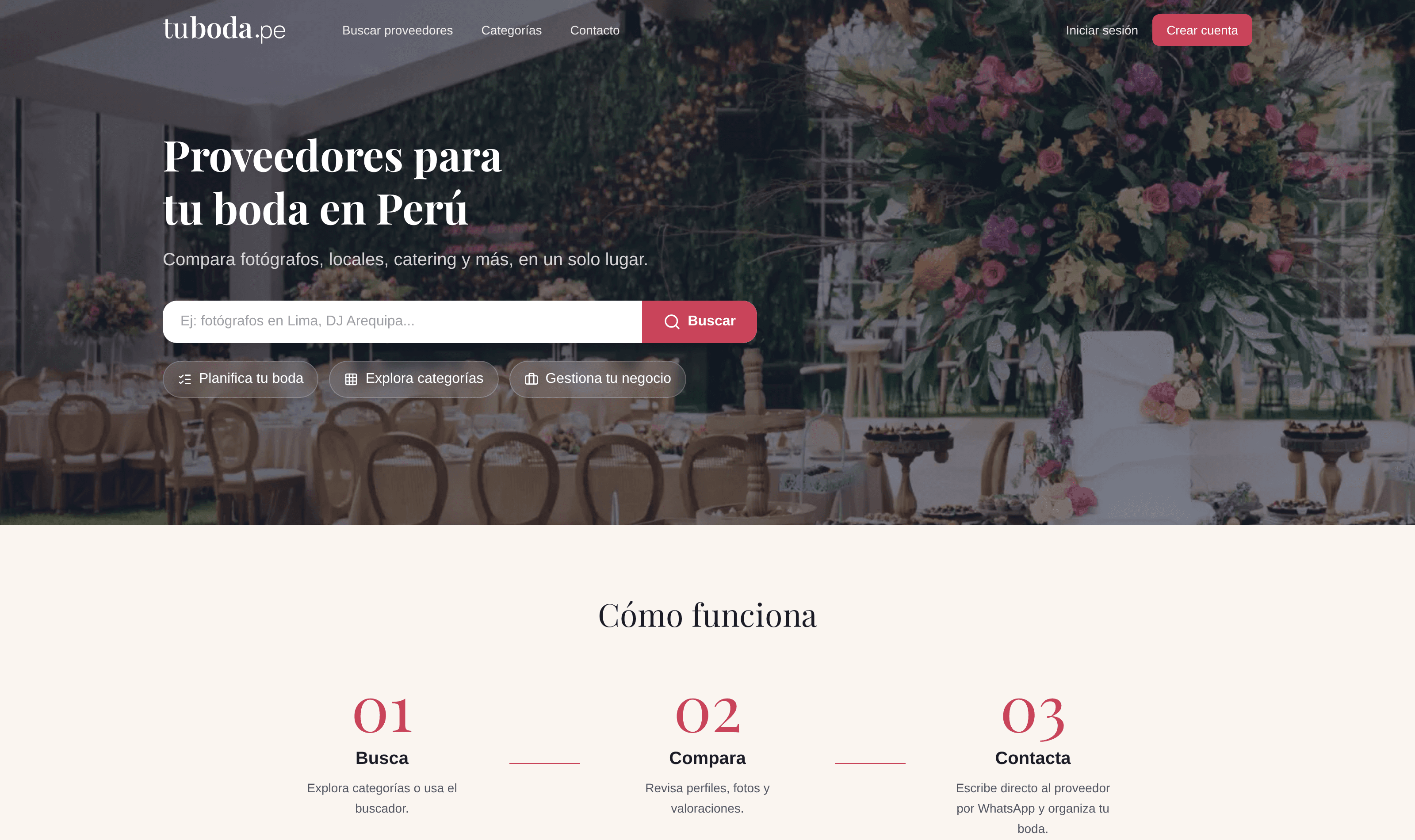
Role
Product Designer
Product
Wedding platform for couples and vendors
Status
Live & continuously evolving
Responsibilities
Product strategy, research, UX/UI, content, analytics, operations and growth
Audiences
Couples & wedding vendors
When Matrimonios.com.pe stopped operating in Peru, it left a noticeable gap in the wedding market.
Couples were still looking for vendors, but much of that discovery had moved to Instagram. Social media was useful for finding inspiration and businesses, but it was harder to compare vendors, understand exactly what they offered and find recommendations from couples with similar needs.
This was particularly difficult for people who did not have close friends or family who had recently planned the kind of wedding they wanted.
We saw an opportunity to explore whether a new product could make that process easier for both couples and vendors.
Before defining the product, we spoke with couples who were planning their weddings or had recently gone through the process.
We also interviewed wedding vendors to understand how they presented their businesses online and what happened after a potential client contacted them.
These conversations showed us that the opportunity was broader than simply creating another vendor directory.
Instagram helped couples discover vendors, but comparing options and understanding exactly what each business offered was much harder.
Reviews and recommendations were especially important for couples who did not have close friends or family who had recently planned a similar wedding.
Enquiries were often managed through scattered conversations, making follow-up difficult and sometimes causing opportunities to be missed.
Not every small business could maintain its own website, while social media did not always communicate everything couples needed to know before making contact.
The opportunity was not simply to create another wedding directory. It was to create value for both couples and vendors.
Couple experience
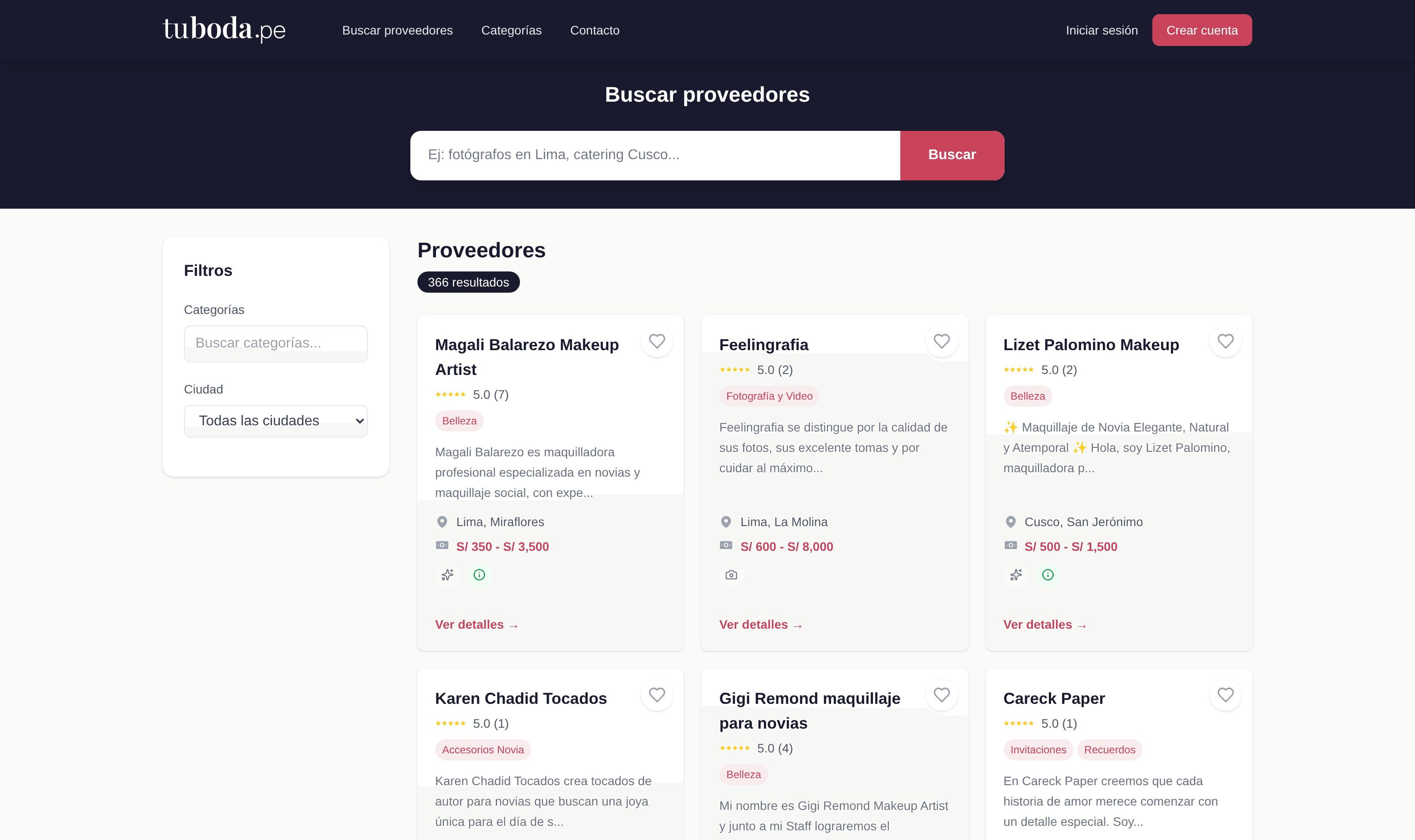
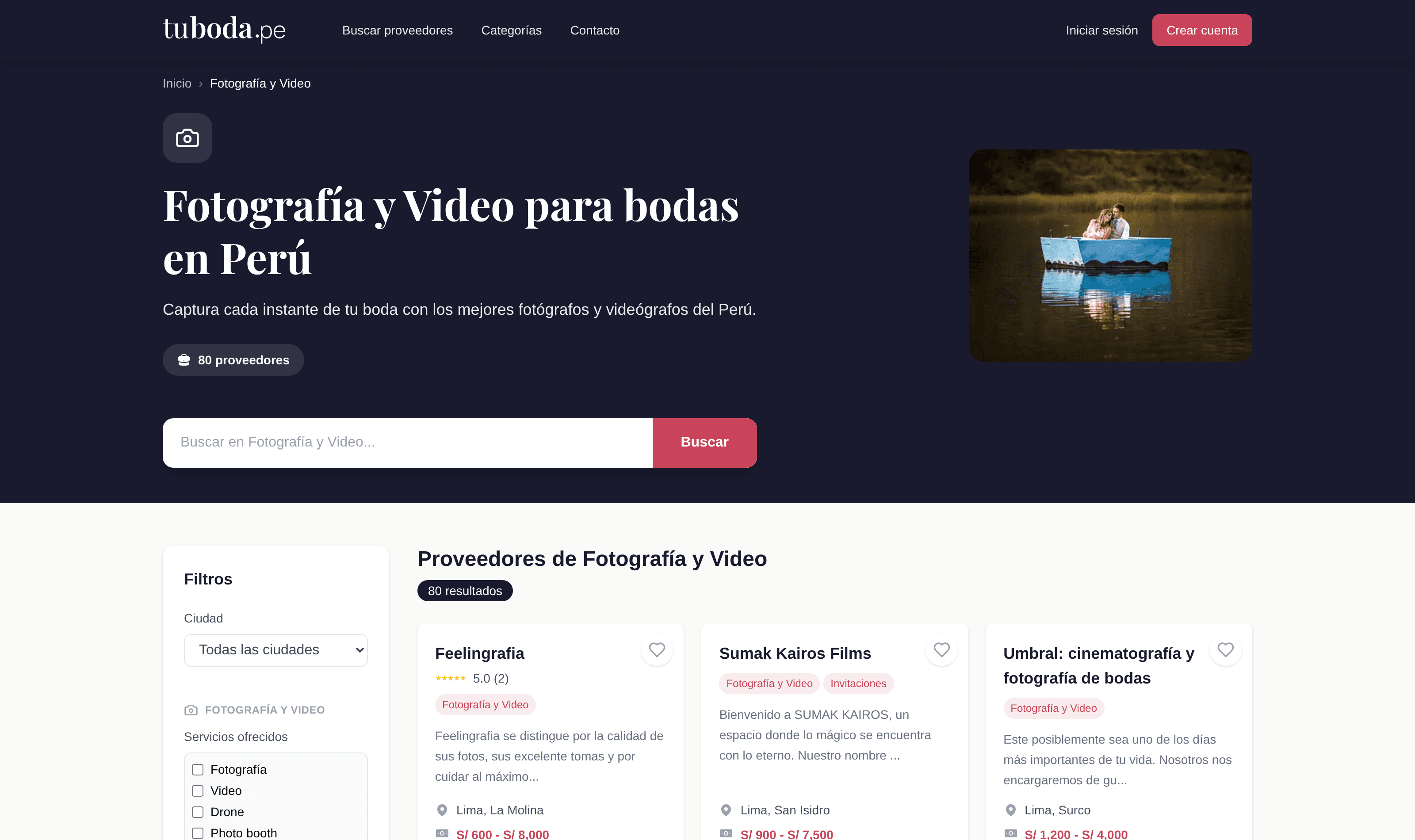
The first challenge was helping couples move from simply discovering businesses to being able to search, compare and evaluate real options.
The platform supports broad searches as well as category-specific exploration, using filters and comparable information such as location, ratings, price ranges and services.
Finding a vendor is only useful if couples can quickly understand what they offer. Vendor profiles therefore needed to provide much more context than a traditional directory listing.
I structured the experience around the information couples need before contacting a business: portfolio, location, styles, services, category-specific characteristics, reputation and direct actions such as WhatsApp and favorites.
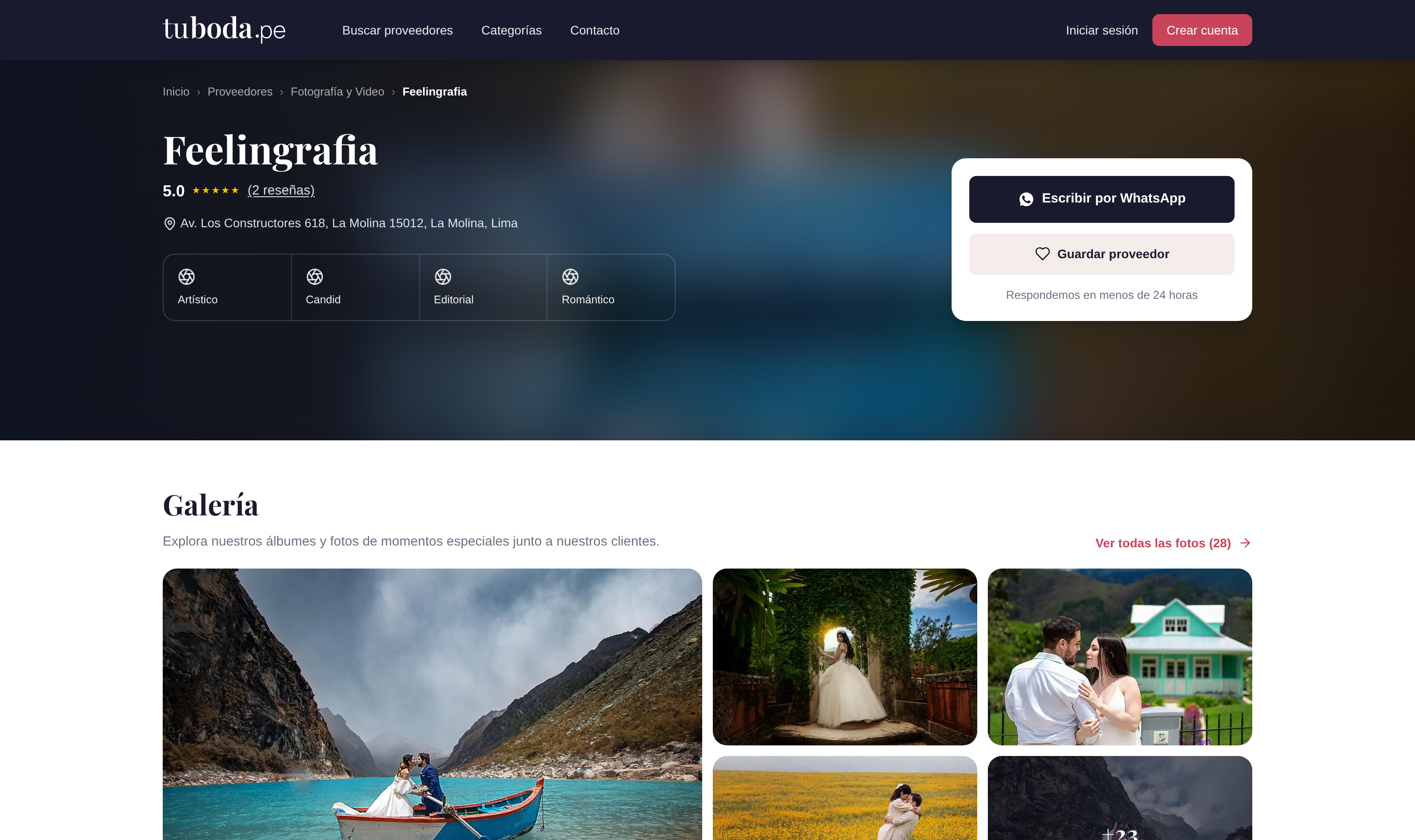
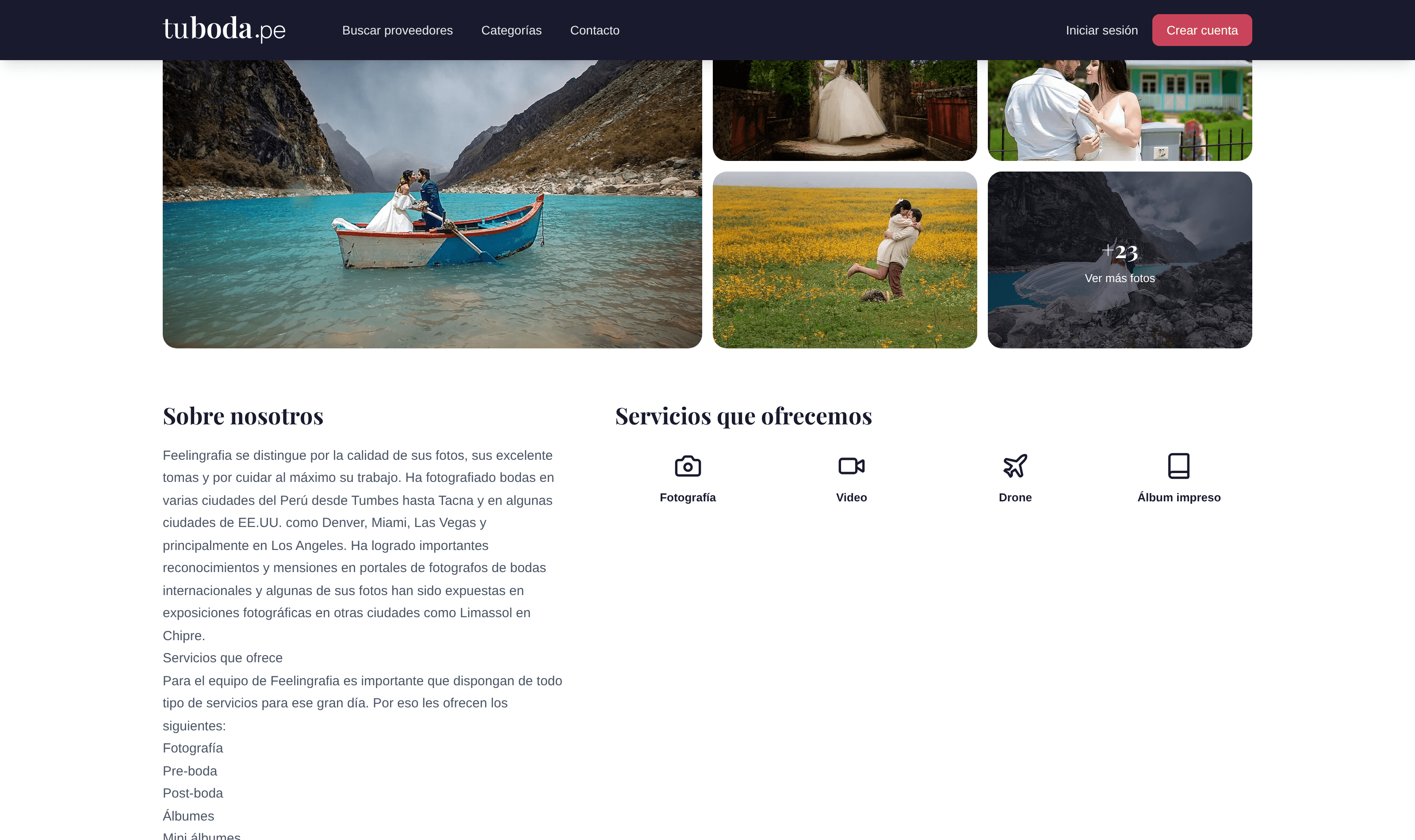
Profiles give businesses a dedicated place to explain what they do and present information that can otherwise be difficult to find consistently across social media.
Trust
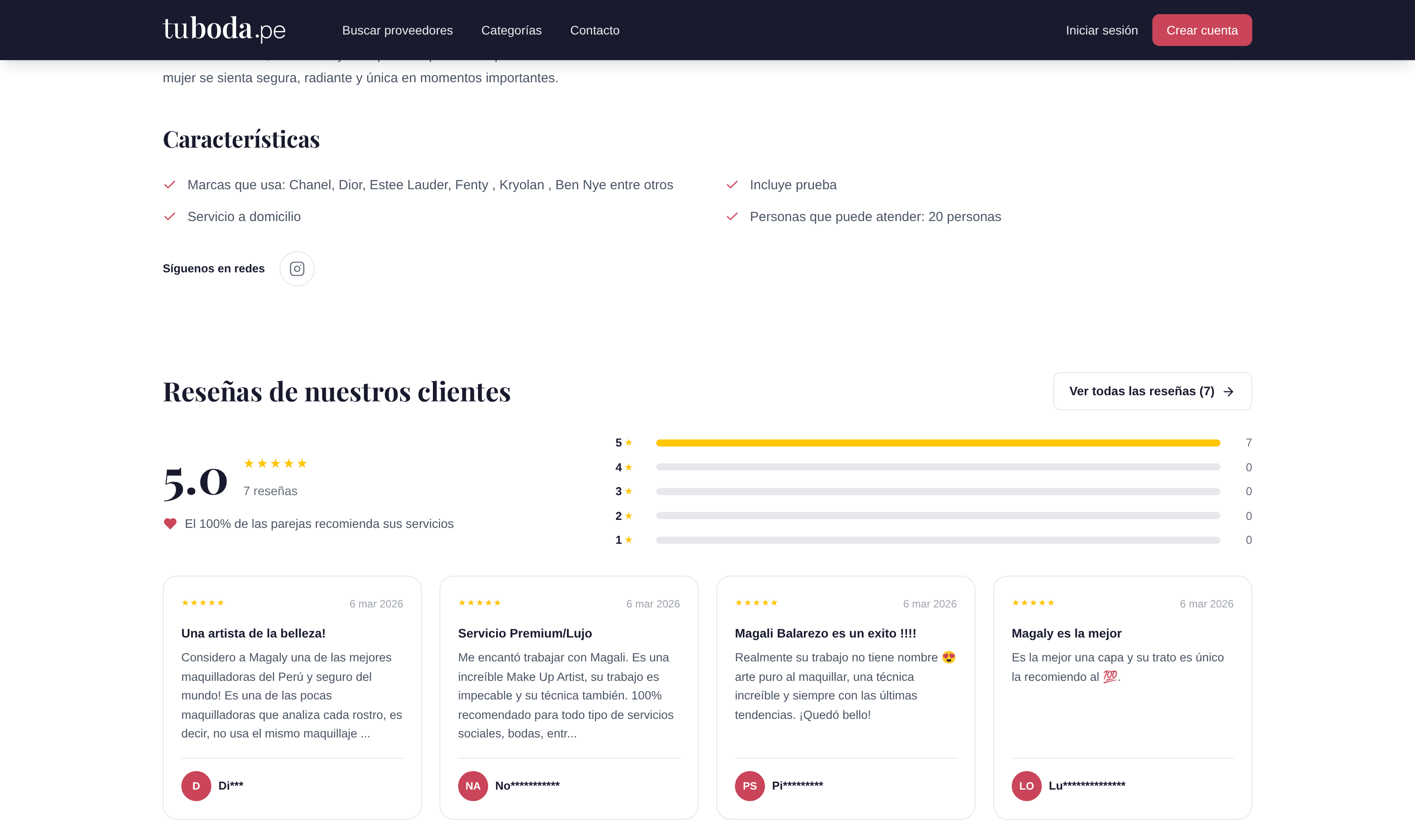
Reviews responded directly to one of the strongest needs we heard from couples: access to recommendations beyond their immediate social circle.
Ratings, written reviews and recommendations help couples evaluate vendors with greater confidence before making contact.
Vendor experience
Our interviews also showed that having and maintaining a dedicated website was not realistic for every wedding business.
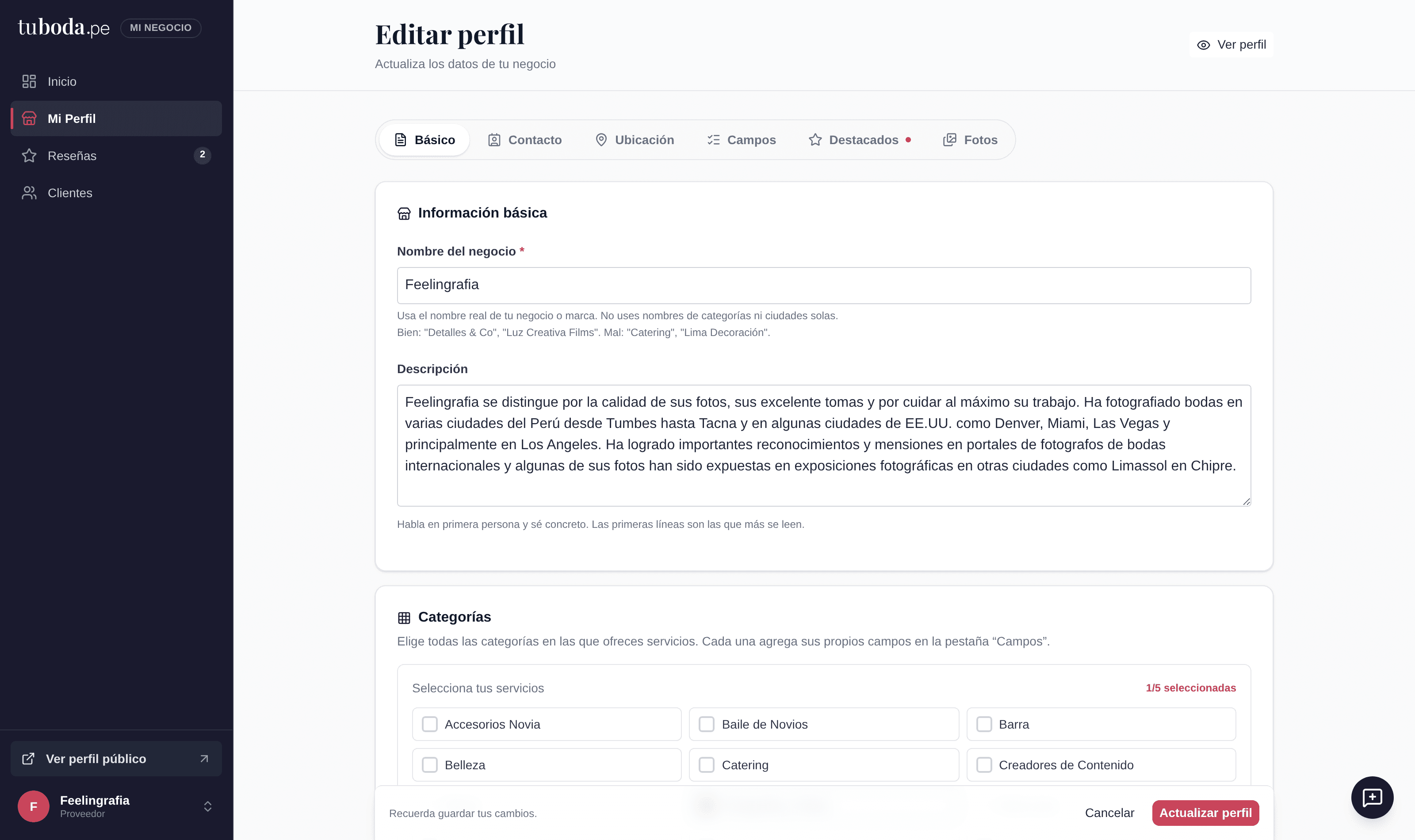
I designed a private workspace where vendors can manage the information that appears on their public profile, including business details, contact information, location, photos and service-specific content.
Because a venue, photographer and makeup artist need to communicate different information, the system combines a shared profile structure with fields that adapt to each vendor category.
Business opportunities
Vendors told us that enquiries could become scattered across different conversations and were sometimes difficult to follow.
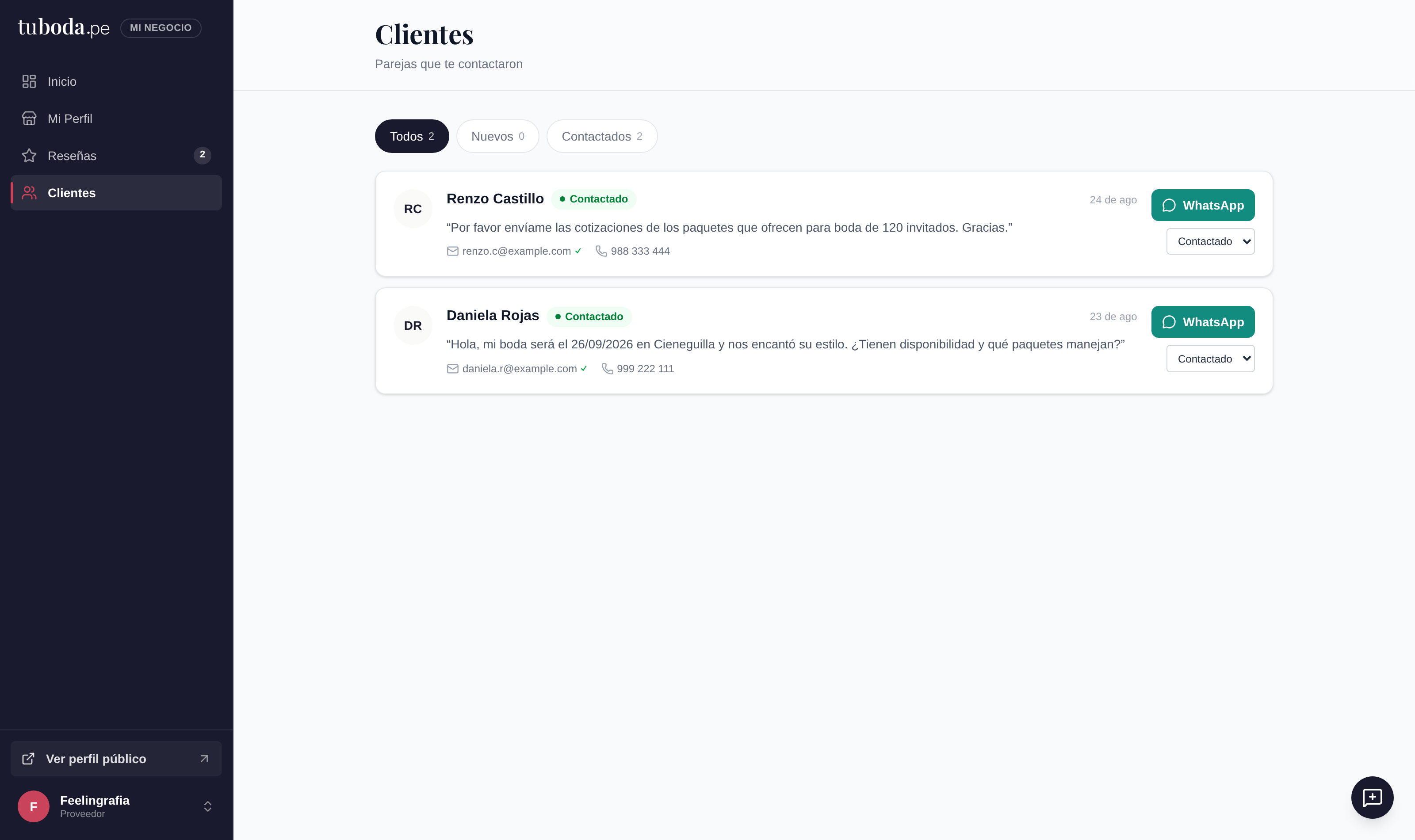
The Clients area gives businesses a simple way to see who contacted them, understand the request, respond through WhatsApp and distinguish new enquiries from those they have already followed up on.
Beyond vendor discovery
Finding vendors was the starting point, but planning a wedding continues long after a couple saves or contacts a business.
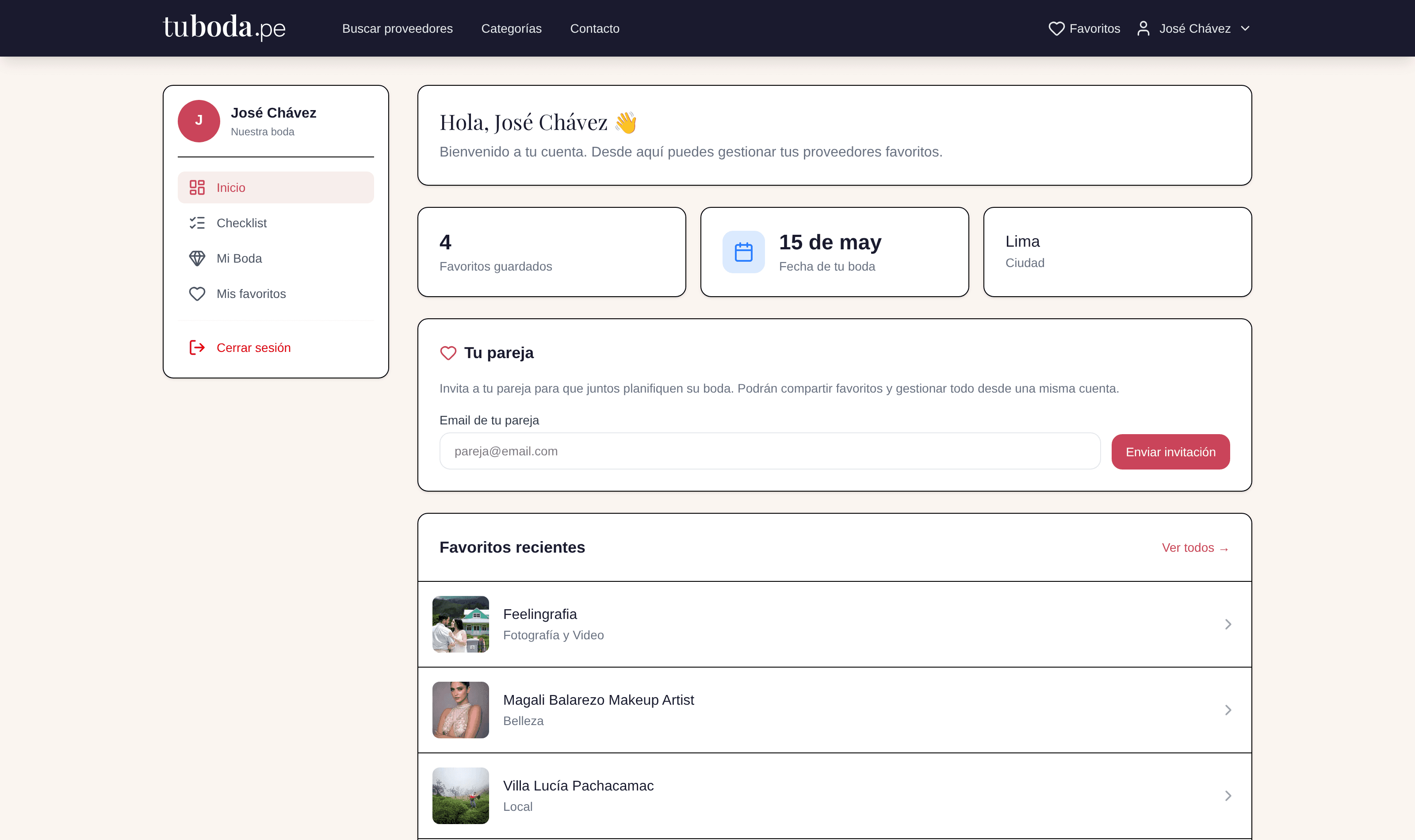
As tuboda.pe evolved, I expanded the couple experience to bring wedding information, favorite vendors and planning tools into the same account.
Planning
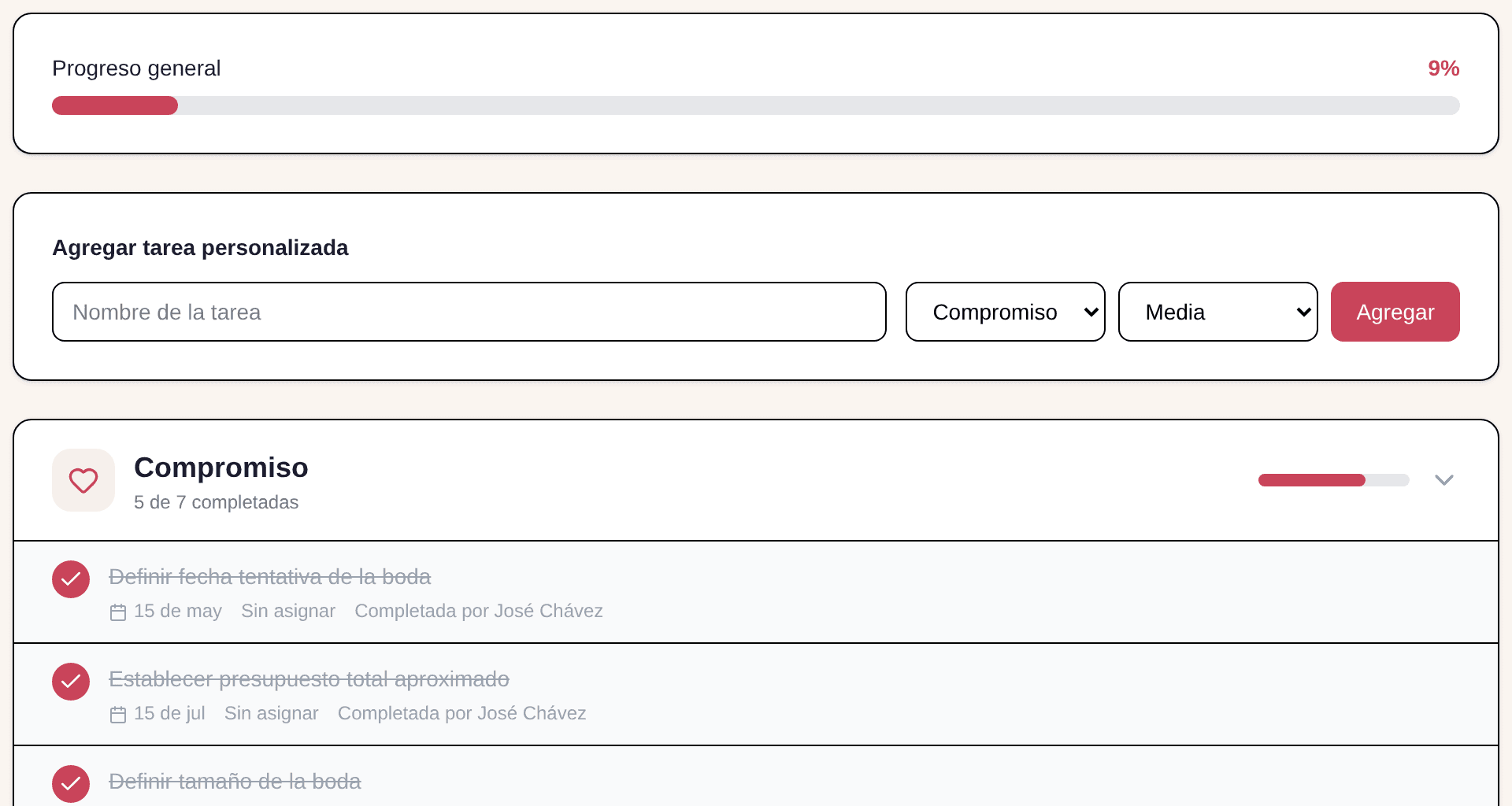
The wedding checklist gives couples a structured starting point instead of asking them to build a plan from scratch.
It includes predefined tasks for different stages of the wedding while still allowing couples to create their own tasks and adapt the plan to their needs.
65
weddings using the checklist
4,421
planning tasks created
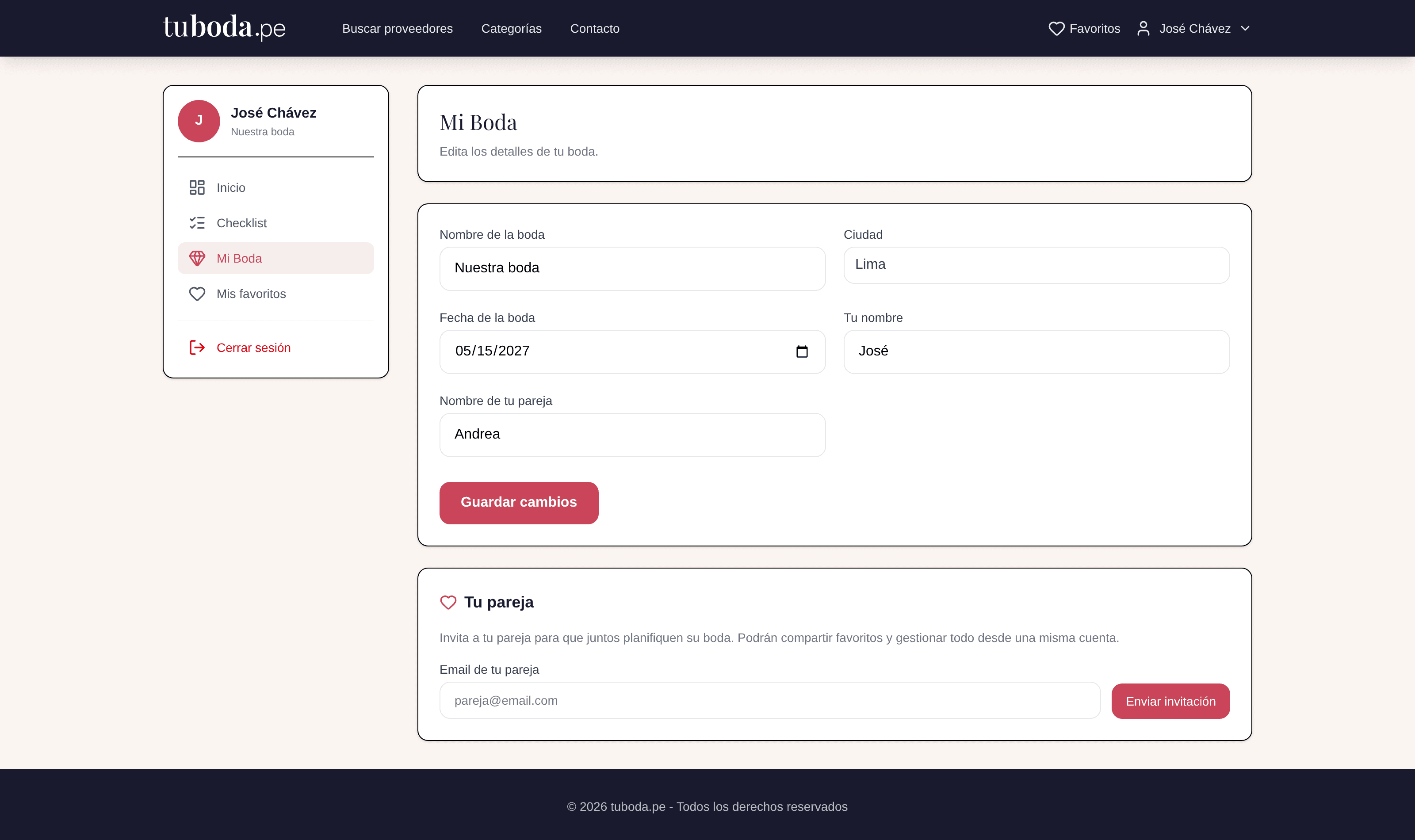
Couples can add the details of their wedding and invite their partner to share the same planning experience, including favorites, tasks and decisions.
In the first five months after launch:
561
registered users
366
approved vendors
243
weddings created
4.4K+
planning tasks created
65
weddings using the checklist
52
approved reviews
261
contact messages
Building a product that has been live from the beginning has changed the way I think about design decisions. There is no completely fixed scope and no single interface that represents the entire experience.
Every decision competes for priority with user acquisition, bringing more vendors onto the platform, content, operations and technology. A useful feature can still be the wrong thing to prioritize at a particular moment.
Designing for two audiences also means understanding how improvements for one can create value for the other. Better vendor profiles help couples make more informed decisions, while better search and planning experiences can create more opportunities for vendors.
This project continues to reinforce that product design is not only about designing interfaces — it is about understanding the system that makes an experience useful, valuable and sustainable.