
The challenge
Create a scalable way for public entities, including those with limited technical resources, to digitize procedures and services without requiring programming, software installation or custom development.
Public sector · Digital government
How we transformed a recurring government need into a reusable platform that enabled public entities to create digital procedures without programming.
Role
UX Lead & UX Designer
Scope
End-to-end service design
Duration
2 months
Activities
Research, interaction design, prototyping and usability testing
Tools
Axure RP, Miro
60%
of local government procedures followed a similar form-and-response interaction.
While researching the operating license procedure at the Municipality of La Victoria, we identified a recurring pattern: around 60% of local government procedures involved a single interaction — submitting information through a form and receiving a response.
Digitizing each procedure individually required time, technical resources and investment that many public entities did not have.
Instead of continuing to build one service at a time, we started exploring a different question:
What if government teams could digitize these procedures themselves?
Create a scalable way for public entities, including those with limited technical resources, to digitize procedures and services without requiring programming, software installation or custom development.
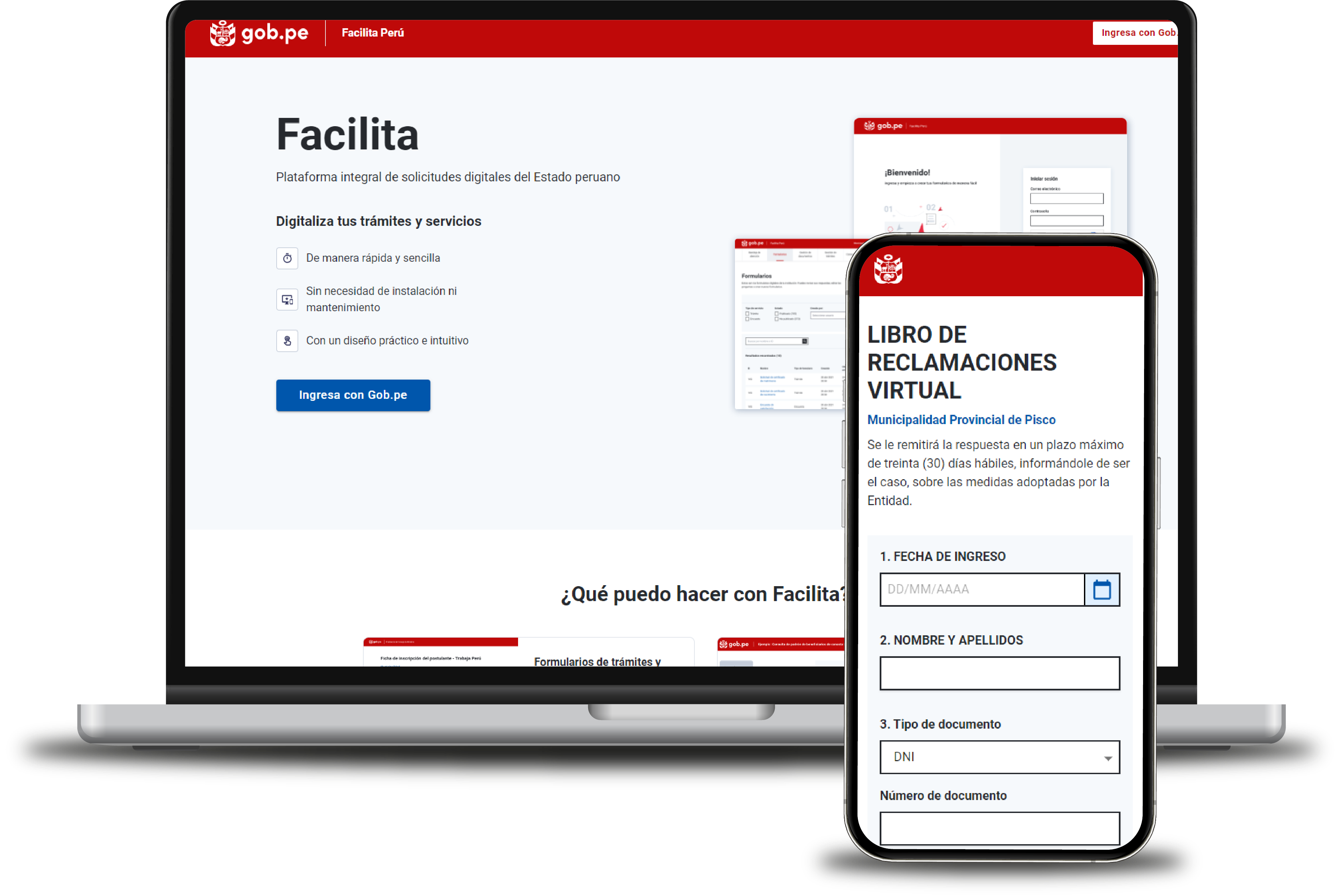
We designed Facilita Perú, a user-friendly platform that allowed public entities to create official digital forms through a simple content management system without programming.
The goal was not simply to create a form builder, but to provide a reusable foundation for digitizing many different public procedures.
We interviewed IT specialists from different types of public entities to understand what procedures they had already digitized, how their internal workflows operated and what they needed from a new digitization service.
The research revealed that the need for digital transformation was real, but so were the operational and technical barriers preventing institutions from moving faster.
01
The pandemic increased the urgency to move public procedures online.
02
Available digital tools were not always intuitive for the teams expected to use them.
03
Technical departments were already managing multiple support and maintenance responsibilities.
04
Reduced tax revenue increased the need for digital payment alternatives.
05
Public entities showed a strong interest in actively participating in government digital transformation.
These findings led us to define a focused MVP: a no-code form builder.
The goal was to give local governments a useful service with broad reach, allowing them to create official digital forms without installing software, purchasing new tools or having programming skills.
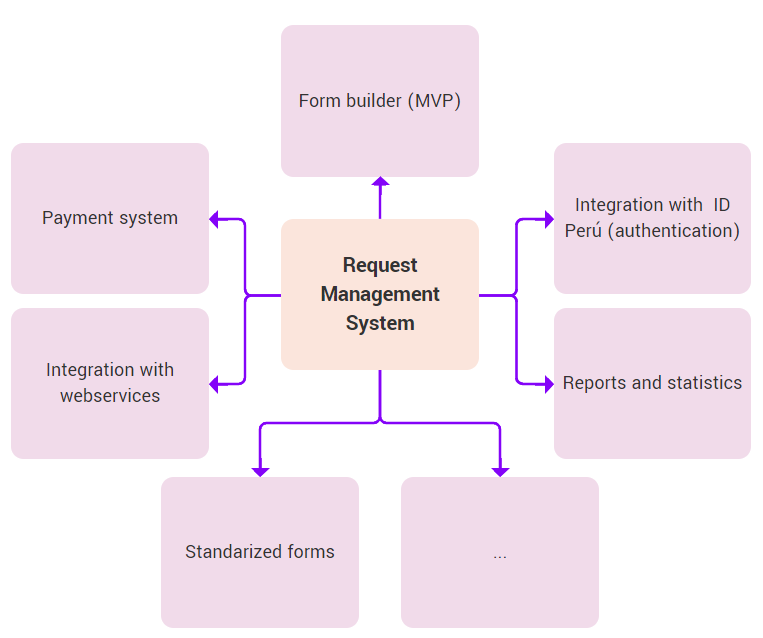
The product was conceived as a foundation that could later evolve with capabilities such as payments, authentication and integrations with local government web services.
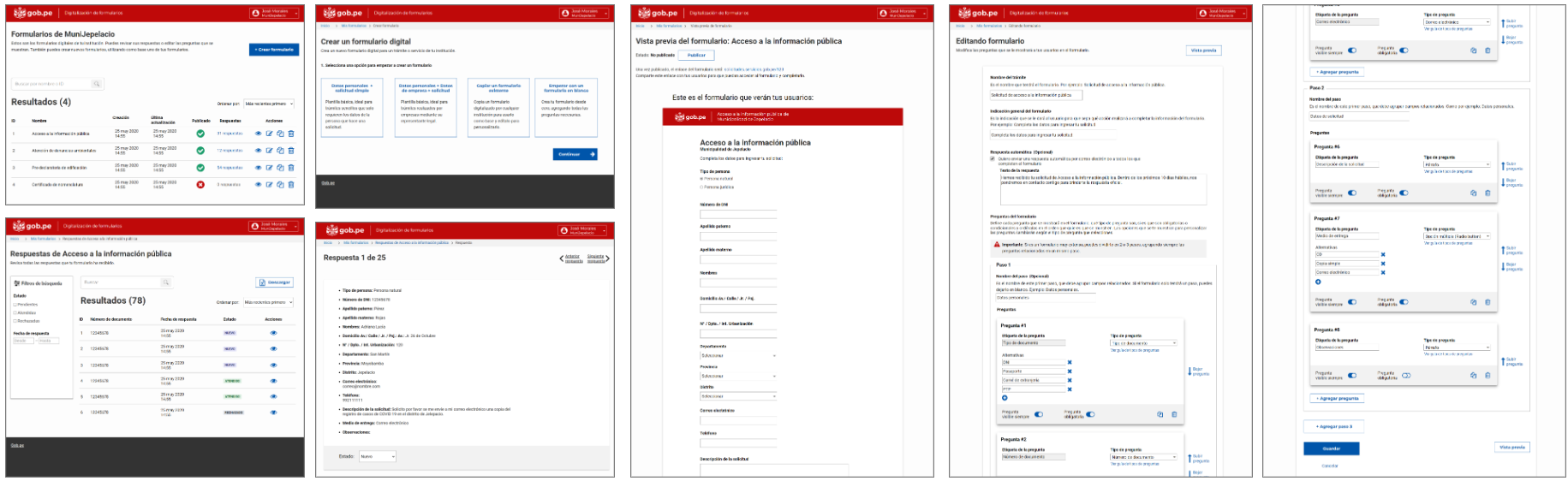
We identified two journeys that needed to work before anything else: creating a form and reviewing citizen responses.
Users accessed the platform with their organization credentials, created or reviewed forms and could assign statuses to submissions. Later iterations introduced different permission levels and capabilities such as templates.

Scroll horizontally to explore the complete flow.

Scroll horizontally to explore the complete flow.

We used wireframes to quickly validate the proposed task flows, then created an interactive prototype in Axure RP.
The prototype was tested with 12 users across two rounds of usability testing.
The findings directly influenced the product design and helped us expand and refine the initial experience.
12
users
2
testing rounds

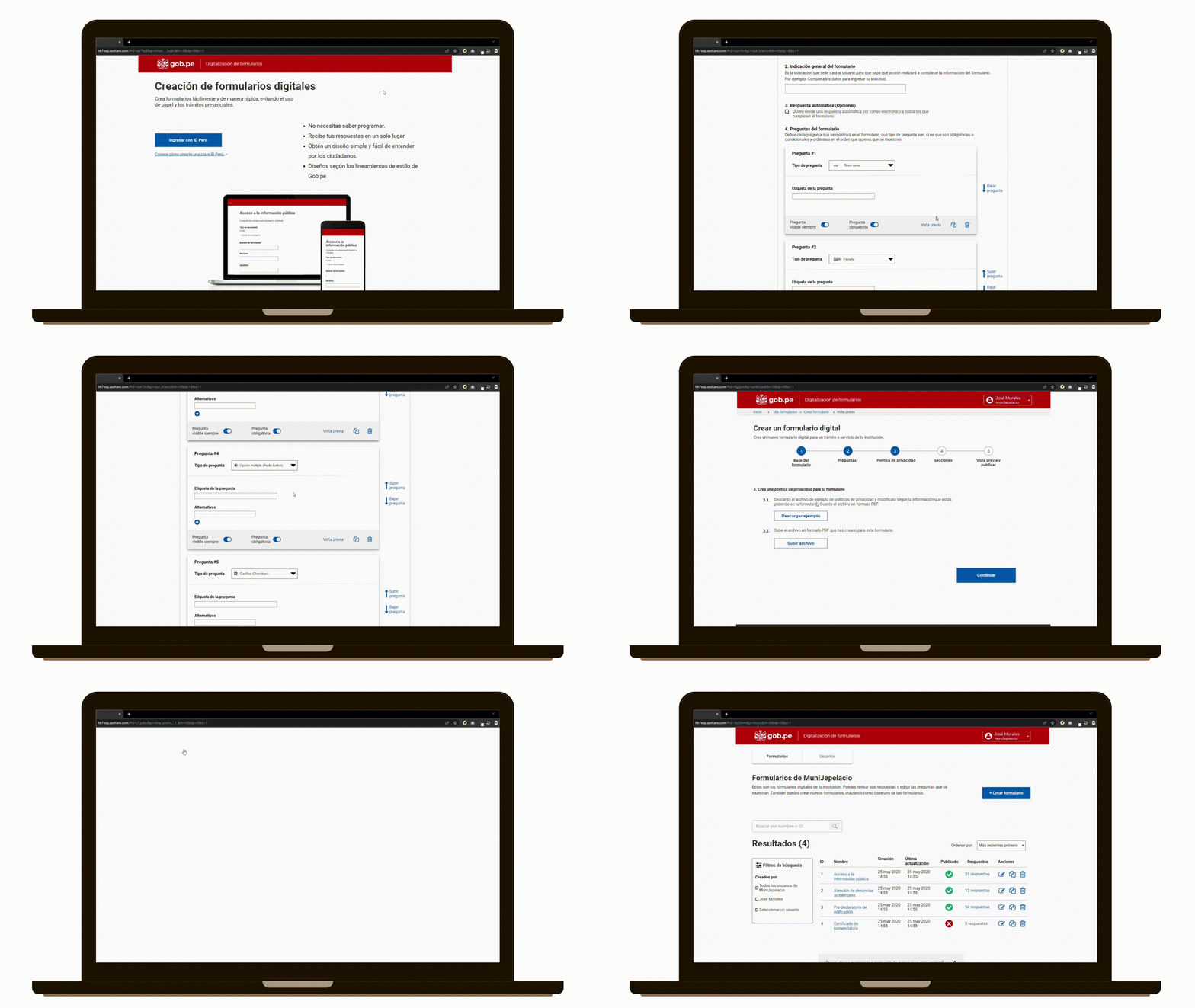
The final prototype incorporated the findings from testing and expanded the service's capabilities.
Users could create forms from scratch or from a template, manage more complex forms and track the status of individual responses.
The MVP launched within the estimated timeframe and saw particularly positive adoption among entities with fewer resources.
Within the first six months after launch:
400+
forms created
148
public entities
15K+
citizen responses
The product was especially well received by public entities with limited resources — precisely the organizations the platform was designed to give greater autonomy in digitizing their services.
Facilita challenged a common assumption about digital transformation in government: that resistance to change is primarily a people problem.
What we saw was different. When a service addressed a real operational need and reduced effort rather than adding complexity, teams not only adopted it — they actively looked for ways to contribute to its improvement.
The project reinforced an idea that continues to shape my work: successful transformation is less about convincing people to change and more about designing something useful enough that they want to.